


『Differential Pressure Flow Meter Types: Comparing Venturi Nozzles and Pitot Tubes』Related information(flow rotameter|digital flow meter|balo meter|hydraulic flow meter|volumetric meter|positive displacement meter|pitot tube flow meter|displacement meter|cfm meter|variable area flow meter|inline flow meter|differential pressure flow meter|calibrated flow meter|velocity meter|paddle wheel flow meter|oval gear flow meter|anemometer hvac|multiphase flow meter|doppler flow meter|thorpe tube flowmeter|heat flow meter)

Differential Pressure Flow Meter Types Comparing Venturi Nozzles and Pitot Tubes
Quick Answer: Venturi nozzles suit clean gas, steam, and low viscosity liquid lines where low permanent pressure loss and high repeatability justify the cost. Pitot tubes suit large ducts and pipes where installed cost matters more than accuracy. For process control and steam metering, choose a Venturi nozzle. For combustion air, stack gas, or a large water main with an existing tap point, choose an averaging Pitot tube.
Both devices are differential pressure flow meter types. Both follow the same square root relationship between DP signal and flow rate. The difference is in the primary element geometry and how the pressure is measured. Silver Automation Instruments supplies both types with DP transmitters, pressure compensation, temperature compensation, and paperless recorders.
Working Principle of a Venturi Nozzle
A Venturi nozzle is a full bore primary element. Flow enters a convergent section. The cross section narrows to a cylindrical throat. Fluid velocity increases and static pressure drops. A DP transmitter measures the difference between the upstream pressure tap and the throat pressure tap. The square root of this DP signal gives volumetric flow. The downstream recovery cone then slows the fluid and recovers most of the pressure. That is why permanent pressure loss is low.
Working Principle of a Pitot Tube
A Pitot tube is an insertion probe. One port faces the flow and reads total pressure. A second port reads static pressure. The DP transmitter measures the difference. Fluid velocity is proportional to the square root of the DP signal. An averaging Pitot tube has multiple sensing holes across the pipe. That gives a better average than a single point probe. A single point Pitot tube is cheaper but only works well when the velocity profile is known and stable.
Accuracy and Permanent Pressure Loss
Venturi nozzles reach plus or minus 0.5 to 1.0 percent of rate in calibrated flow loops. Uncalibrated Venturi nozzles usually run from plus or minus 1.0 to 1.5 percent of rate. Pitot tubes typically run from plus or minus 1.0 to 3.0 percent. Most engineers see larger Pitot tube errors when the flow profile is disturbed by an elbow or a valve. Permanent pressure loss is different. A Venturi nozzle loses roughly 10 to 20 percent of the measured differential. A Pitot tube blocks very little of the flow area. Its permanent pressure loss can be under 1 percent of the measured DP. That saves power on large blowers and compressors.
Installation and Straight Run Requirements
Venturi nozzles need flanged or welded installation between pipe sections. They need less straight run than an orifice plate but the exact value depends on beta ratio. A beta ratio of 0.6 often needs 8 to 15 pipe diameters upstream. Pitot tubes can be hot tapped into an existing line. That avoids cutting and welding. The trade off is straight run. Averaging Pitot tubes often need 10 to 20 diameters upstream and 5 diameters downstream. Most engineers skip this part until the readings drift. Any elbow, valve, or blower before the Pitot tube can distort the velocity profile.
Application Fit for Water, Steam, Gas, and Chemicals
Venturi nozzles handle clean liquids, saturated steam, superheated steam, natural gas, compressed air, and low viscosity chemicals. For liquids under 100 cP the Venturi nozzle is a good fit. Higher viscosity
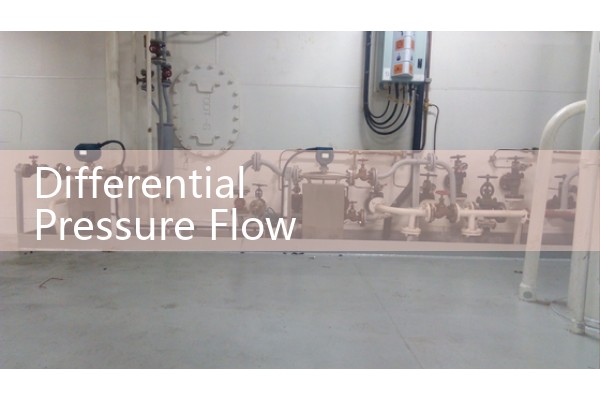
Pitot tubes suit large air ducts, stack gas, combustion air, and large water mains. A desalination plant in the Middle East installed an averaging Pitot tube in a DN600 seawater line because a full bore meter was too expensive. The plant accepted an accuracy near 2 percent of rate. The customer manages seawater fouling with regular backflush.
Cost, Maintenance, and Long Term Behavior
The initial cost of a Pitot tube is lower. The installed cost can be much lower when a hot tap is already available. Here is the thing, the low purchase price can disappear after six months if the sensing ports plug with dirt, condensation, or oil. Venturi nozzles cost more upfront because they are machined into the pipe. Maintenance is low in clean service. Material selection matters for steam and chemicals. Silver Automation Instruments supplies Venturi nozzles in 316 stainless steel as standard and offers other alloys for aggressive service.
Recommended DP Meter Package from Silver Automation Instruments
Both primary elements need a DP transmitter. For gas or steam mass flow, add a pressure transmitter and a PT100 temperature sensor. The flow computer or control system applies density compensation. Silver Automation Instruments supplies the DP transmitter, pressure transmitter, temperature sensor, and a paperless recorder as a complete package. Venturi nozzles are available from DN15 up to DN600 and larger on request. Ask for 4-20 mA HART output if your site uses HART. For hazardous areas, specify ATEX Zone 1 or Zone 2. We have shipped these packages to water plants in Latin America, gas terminals in Africa, and chemical sites in Oceania.
FAQ
What is the main difference between a Venturi nozzle and a Pitot tube?
A Venturi nozzle is a full bore flow element with a throat. A Pitot tube is an insertion probe. The Venturi measures the whole pipe area. The Pitot measures selected velocity points.
Which DP flow meter is better for steam?
A Venturi nozzle is the preferred choice for saturated and superheated steam. It handles high velocity gas with low permanent pressure loss and better long term repeatability than a Pitot tube.
Can a Pitot tube measure dirty water or slurry?
A Pitot tube can plug in dirty or sticky fluids. Use it only with clean gas, air, or filtered water. For wastewater or slurry, choose an electromagnetic flow meter or a Venturi with purge ports if solids are small.
What straight run does a Venturi nozzle need?
Many installations need 8 to 15 pipe diameters upstream. The exact number depends on the beta ratio and the fitting before the meter. Use a flow conditioner if space is short.
How do I request a quote from Silver Automation Instruments?
Send us your fluid type, pressure in bar, temperature in degrees Celsius, pipe size in DN, and flow range in kg/h. For liquid service add viscosity in cP. Add the required signal output such as 4-20 mA HART. Tel: +86-135-1213-1526. WhatsApp: 86-135-12131526. WeChat: +86 13512131526.
 Hot Product
 Related AD
