


『Argon Regulator with Flow Meter: Precise Gas Welding Shield Controls』Related information(flow rotameter|digital flow meter|balo meter|hydraulic flow meter|volumetric meter|positive displacement meter|pitot tube flow meter|displacement meter|cfm meter|variable area flow meter|inline flow meter|differential pressure flow meter|calibrated flow meter|velocity meter|paddle wheel flow meter|oval gear flow meter|anemometer hvac|multiphase flow meter|doppler flow meter|thorpe tube flowmeter|heat flow meter)

Argon Regulator with Flow Meter: Precise Gas Welding Shield Controls
Quick Answer
An argon regulator with a built-in flow meter gives you a single device to drop high cylinder pressure to a stable working level and simultaneously measure shield gas flow. This prevents weld oxidation, porosity, and tungsten spatter in TIG and MIG processes. For repeatable weld quality, look for a dual-stage design, a 1–25 L/min flow tube, and an inlet rating of at least 25 MPa.
What Makes These Regulators Different from Standard Gas Regulators
A standard argon regulator only controls pressure. Welders then guess flow through a separate flowmeter or a needle valve. The combined unit eliminates that guess. The body houses a pressure-reducing seat, a low-pressure chamber, and a sight glass with a calibrated float. When you set the flow knob, you see actual litres per minute on the scale. No extra hose, no secondary needle valve. This design matters most in orbital, aerospace, and sanitary tube welding where even a 2 L/min drift changes the heat-affected zone.
Silver Automation Instruments supplies argon regulators with flow meter assemblies that use brass or stainless steel internals. The flow tube is borosilicate glass with a high-contrast scale. In many units we ship to Southeast Asia and the Middle East, customers request a dual-gauge version. One gauge shows cylinder pressure, the other shows delivery pressure. That lets a technician see when the bottle drops below 500 psi and schedule a swap before a weld stops halfway.
Industries That Rely on Measured Shielding Gas
We see consistent demand from food and beverage pipe fitters who back-purge 304L and 316L stainless tubes. Dairy plants, breweries, and pharmaceutical lines in Australia and New Zealand require documented gas flow logs. A regulator with flow meter helps them record argon flow during each orbital pass. In chemical plants across Latin America, duplex stainless piping needs a strict 12–15 L/min argon envelope. Too little flow causes grey welds. Too much creates turbulence that drags oxygen into the pool.
Marine and shipyard contractors in the Middle East frequently order these units for aluminum hull repairs and heat exchanger fabrication. Because aluminum conducts heat fast, the shield gas must cover the molten pool immediately. A steady 18–20 L/min displayed on the flow meter avoids craters. Automotive performance shops and artists who weld chrome-moly roll cages also buy these regulators, often with a CO2 adapter for mixed-gas blends.
Three Specifications Engineers Always Check
Inlet pressure class. Most cylinder regulators are rated for 25 MPa or 30 MPa. We always recommend a built-in sintered filter to stop copper burrs from the cylinder valve. The filter keeps the seat clean and extends service life.
Flow range and scale resolution. The common tube covers 1–25 L/min argon. For heavy-wall pipe or large cup sizes, you might need a 2–35 L/min tube. Silver Instruments offers both. The scale divisions are every 1 L/min, which let you dial 10 L/min or 14 L/min without interpolation. Some shops also ask for a dual-scale in SCFH because their work instructions originated from US standards.
Connection standards. In Australia, argon regulators often use a Type 10 or Type 30 fitting. In Europe and parts of Asia, W21.8-14 RH is typical. North American bottles take CGA-580. Before shipping, we confirm the nut thread and nipple standard with the customer. This avoids adaptor leaks that bleed expensive argon.
What Happens on a Real Site Without Precise Flow Control
Here is the thing. A contract fabricator in Malaysia was welding 316L schedule 10 pipes for a palm oil refinery. Their old two-gauge regulator had no flow meter. Welders set the needle valve by ear and checked the spatter pattern. After a few batches, black oxide appeared inside the root pass. The root color never went below dark blue. We supplied an argon regulator with a flow tube set to 12 L/min and a purge meter for the p
Matching a Flow Meter Regulator To Your Welding Process
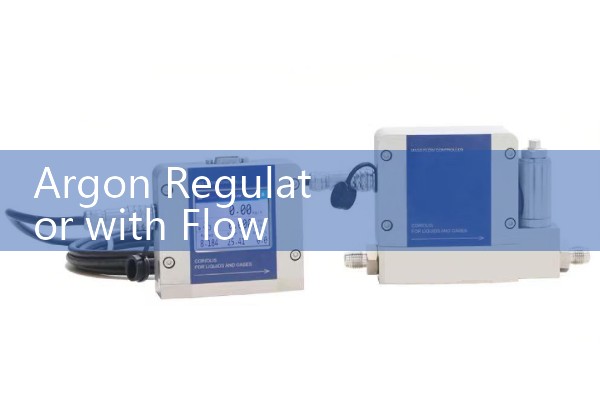
Gas tungsten arc welding on titanium tubes for desalination plants often demands 10–15 L/min pure argon through a trailing shield on top of the torch gas. In that case, you may need a high-flow regulator plus a separate thermal mass flow meter on the main header. Silver Automation Instruments also builds inline mass flow meters for argon, helium, and mixed gases. These meters deliver a 4-20 mA signal and can log flow data on our paperless recorders. For most manual TIG jobs though, a flow meter regulator on the cylinder is enough.
If you use a water-cooled torch and a gas lens, you can often reduce flow by 30 % and still get a clean puddle. The flow tube lets you verify this drop directly without reaching for a portable rotameter. Many training centers in Vietnam and Indonesia now insist that learners read the flow tube, not just set the knob at a number. This builds the habit of checking actual flow against setpoint.
Silver Instruments Regulator Features That Reduce Callbacks
Our flow meter regulators go through a seven-point factory test. We cycle the seat 200 times with nitrogen and check for creep. The low-pressure gauge is glycerine-filled to damp vibration from the welding table. The forged brass body is nickel-plated to resist sweat and humidity in coastal workshops. An external relief valve opens if the diaphragm fails, venting gas away from the operator. Because many of our customers work in confined spaces on FPSO vessels or inside tank farms, we also supply spark-free stainless steel variants on request.
Frequently Asked Questions
Can I use an argon flow meter regulator with CO2 or a mixed gas? Yes, but you must specify the gas when ordering. The flow tube scale is gas-specific. A tube calibrated for argon will read incorrectly with CO2 because of density differences. We can supply CO2 or Ar/CO2 mixed scales. Tell us your blend ratio.
Does a dual-stage regulator help with flow stability? Dual-stage regulators maintain outlet pressure even as the cylinder empties. This stops flow rise at the end of the bottle. If you do code work or weld reactive metals, a dual-stage design is worth the extra cost. We offer both single-stage and dual-stage argon flow meter regulators.
What thread standard should I ask for? It depends on your cylinder valve. Common options are W21.8-14, CGA-580, BS 341 No. 4, and Type 10. Send us a photo of your cylinder valve if you are unsure. Our sales team will match the correct inlet nut.
How do I maintain the flow meter tube? The borosilicate tube can collect oil mist if the gas supply is dirty. Remove the top nut and clean the tube with isopropyl alcohol. Do not use acetone on plastic seals. Also replace the inlet filter element once a year or sooner if you see float bouncing. Spare filters and seals come in a service kit.
Is there a digital option for logging gas flow? For full traceability, pair the regulator with a thermal mass flow meter or a coriolis mass flow meter from Silver Instruments. The flow meter sits on the main line and outputs 4-20 mA HART to a PLC or paperless recorder. This setup is common in semiconductor pipe welding and pharmaceutical clean rooms.
Request a Quote and Share Your Welding Setup
To get the right argon regulator with flow meter, tell us your inlet pressure in bar or psi, the required flow range in L/min, the outlet pressure setpoint, and the cylinder connection thread. Also mention if you need a purge meter for pipe interiors. Reach Silver Automation Instruments at [email protected], call +86-135-1213-1526, or message us on WhatsApp at 86-135-12131526. We ship from stock to Southeast Asia, Oceania, the Middle East, Africa, and Latin America. Most orders dispatch within 48 hours after you confirm the thread standard.
 Hot Product
 Related AD
