


『Why is My Turbine Flow Meter Reading Inconsistent: Troubleshooting Pulsing Lines』Related information(flow rotameter|digital flow meter|balo meter|hydraulic flow meter|volumetric meter|positive displacement meter|pitot tube flow meter|displacement meter|cfm meter|variable area flow meter|inline flow meter|differential pressure flow meter|calibrated flow meter|velocity meter|paddle wheel flow meter|oval gear flow meter|anemometer hvac|multiphase flow meter|doppler flow meter|thorpe tube flowmeter|heat flow meter)

Why is My Turbine Flow Meter Reading Inconsistent: Troubleshooting Pulsing Lines
Quick Answer: Pulsating flow makes the turbine rotor speed up and slow down with each pressure pulse. The meter then averages these swings and gives a reading that jumps or drifts. Add back pressure, install a pulsation damper, or fix the root cause like a diaphragm pump and you will get a stable measurement.
What a Pulsing Line Does to a Turbine Flow Meter
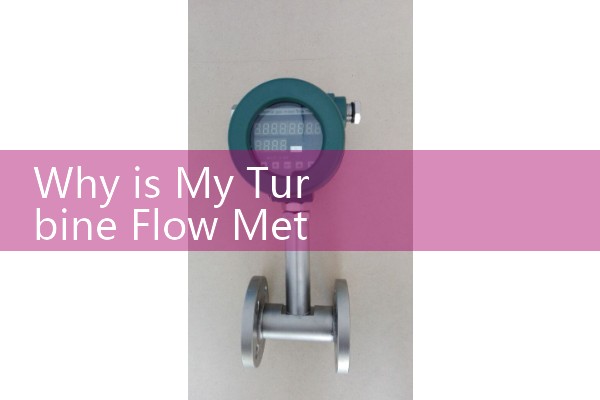
Turbine flow meters count the rotations of a rotor inside the pipe. Each rotation equals a fixed volume of fluid. This works well when the flow is steady. In a pulsing line the flow velocity changes many times per second. The rotor speeds up during the high pressure part of the pulse and slows down during the low pressure part. A 4-20 mA HART output or a pulse output will show a wobbly reading on the PLC screen. We have seen this on customer sites many times. The scatter is not random noise from the pickup coil. It follows the frequency of the pump strokes.
Most industrial turbine flow meters have a response time measured in milliseconds. If the pulsation frequency is close to the rotor blade passing frequency, you can even get a kind of mechanical resonance. That wears out the tungsten carbide bearings early. A customer in Vietnam sent us a turbine meter for solvent metering last year. The bearings were shot after three months. The root cause was a single diaphragm pump feeding the line with no pulsation snubber.
Common Sources of Flow Pulsation
In practice, the list of suspects is short. Piston pumps, diaphragm pumps, peristaltic pumps all generate a pulsed flow by design. A compressor in a gas application can create pressure pulses that reflect back into the meter. Fast acting solenoid valves that open and close in a dosing system also cause a sudden slug of velocity. Even a long pipe with a partly open ball valve downstream can set up an oscillation. So check the pump type first. If the pump is a centrifugal pump with a stable VFD, pulsing is unlikely. But a chemical dosing skid with a positive displacement pump is almost guaranteed to have a pulsation problem.
Quick Field Checks to Verify Pulsation
Here is a low-cost check. Put a pressure gauge with a snubber on the meter inlet. Watch the needle. If it shakes rapidly around a central value, you have pulsation. Another method is to read the raw frequency output from the turbine meter with an oscilloscope. The waveform will look like a ragged sine with amplitude modulation. Most engineers skip this part and go straight to the pump data sheet. If the pump stroke rate in Hz is close to the instability frequency you see on the flow totalizer, you have the answer.
Also look at the installation. A turbine flow meter needs straight pipe upstream and downstream to remove swirl and asymmetry. The standard is 10 DN upstream and 5 DN downstream for a turbine meter. But straight pipe does not fix pulsation. It only fixes swirl. We receive many inquiries where the installer mixed up swirl and pulsation. If you have a DN25 turbine meter with a 300 mm straight run and still unstable readings, swirl is not your main problem.
How to Fix Pulsation Induced Errors
There are three proven fixes in order of cost and complexity. First, increase back pressure. Put a pressure sustaining valve downstream of the meter. A rule of thumb is to maintain at least 1.5 time
Second, install a pulsation damper or a surge chamber close to the meter. For a DN15 turbine meter on a diaphragm pump, a small nitrogen charged damper with a bladder works well. We recommend sizing the damper to at least ten times the pump displacement per stroke. A paint manufacturer in Southeast Asia solved their white spirit metering problem this way. Before the damper, the flow reading jumped between 120 L/h and 200 L/h. After the damper, the signal settled at 158-162 L/h.
Third, if neither back pressure nor a damper is enough, consider switching to a flow meter technology that ignores pulsation. An oval gear flow meter handles pulsing flow naturally because the gears trap a fixed volume. A Coriolis mass flow meter also gives direct mass flow regardless of pulsation and can send a stable 4-20 mA signal. But for a simple turbine meter, the damper is the most cost-effective choice on a budget.
When to Contact Silver Automation Instruments
Send us your fluid type, viscosity in cP, operating pressure in bar, temperature in °C, pipe size in DN, and the full flow range in L/h or kg/h. We will suggest a turbine flow meter model with the right bearing material, pickup coil type, and can include a matched pulsation damper if needed. Our turbine flow meters go from DN4 up to DN200, with options for PT100 temperature sensing, ATEX Zone 1 certification, and 4-20 mA HART or pulse output. We ship to Southeast Asia, Oceania, Latin America, Africa and the Middle East every week.
FAQ
What causes flow pulsations in turbine flow meter installations?
Positive displacement pumps like diaphragm, piston or peristaltic pumps generate a cyclic flow by design. Fast switching solenoid valves and compressors can also introduce pressure pulses that upset the turbine rotor speed.
Can a flow conditioner fix a pulsating turbine meter reading?
No. Flow conditioners remove swirl and improve the velocity profile but do not dampen pressure or flow pulsations. You still need a pulsation damper or back pressure valve.
How do I know if my pipe layout causes pulsations?
Check for a partly open valve downstream, a long dead leg, or a pump that cycles on and off. Measure the pipe pressure with a gauge. A swinging needle points to pulsation.
Does Silver Automation Instruments offer turbine flow meters for viscous fluids?
Standard turbine meters work best below 5 cP. For fluids up to 100 cP we recommend an oval gear flow meter. For higher viscosities a Coriolis meter is the right choice. Tell us your fluid viscosity and we will give an honest recommendation.
What output signal is best for monitoring pulsation?
Pulse output with a fast capture card lets you see the unstable frequency directly. A 4-20 mA HART output will average the signal and may hide the pulsation, so the PLC sees a wandering analog value.
Silver Automation Instruments
Email: [email protected]
Tel: +86-135-1213-1526
Whatsapp: 86-135-12131526
WeChat: +86 13512131526
 Hot Blog
 Related AD
