

 Current position > Product detail
『Portable Flow Meter Water: Handheld Non-Invasive Pipeline Inspection Systems』Related information(flow rotameter|digital flow meter|balo meter|hydraulic flow meter|volumetric meter|positive displacement meter|pitot tube flow meter|displacement meter|cfm meter|variable area flow meter|inline flow meter|differential pressure flow meter|calibrated flow meter|velocity meter|paddle wheel flow meter|oval gear flow meter|anemometer hvac|multiphase flow meter|doppler flow meter|thorpe tube flowmeter|heat flow meter)

Portable Flow Meter Water: Handheld Non-Invasive Pipeline Inspection Systems
Quick Answer
A handheld non-invasive portable flow meter lets field crews measure water flow from outside the pipe in minutes. No cutting, no process shutdown, no contamination risk. Silver Instruments supplies clamp-on ultrasonic meters for pipe sizes DN15 to DN6000, accuracy ±1% of reading, battery-powered data logging, and support for clean water, wastewater, seawater, and chilled water. Send us your pipe material, outer diameter, wall thickness, and fluid temperature to [email protected] and we will recommend the right transducer set with a quote within one working day.
What a Handheld Non-Invasive Water Flow Meter Actually Is
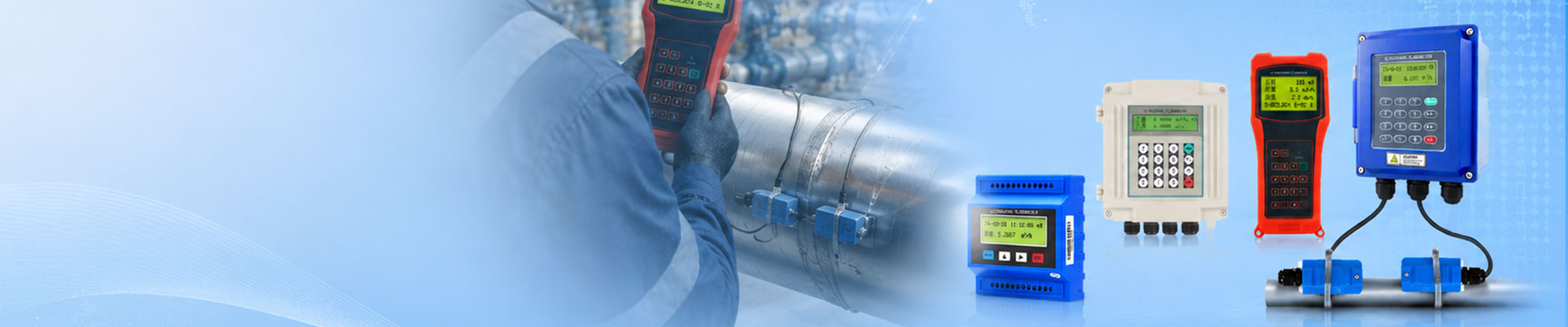
Most field technicians know the pain of scheduling a line stop just to install a spool-piece meter. A handheld non-invasive water flow meter removes that pain completely. The technology uses clamp-on ultrasonic transducers that strap to the outside of an existing pipe. The meter fires ultrasonic signals through the pipe wall into the moving fluid, measures the transit time difference, and calculates volumetric flow rate. Silver Instruments builds these meters inside a rugged portable case with a colour display, keypad, and internal rechargeable battery. You open the case, couple the transducers to the pipe, and start reading flow in ten minutes.
Because the transducers never touch the fluid, the method works on steel, ductile iron, copper, PVC, HDPE, and lined pipes. The only practical limits are pipe wall scaling, heavy internal corrosion, or very old concrete with large air pockets. Here is the thing. Most sites with standard water, wastewater, or cooling water pipes in DN50 to DN1200 will get a solid reading on the first try if the straight pipe run is respected.
Key Specifications and Meter Selection
Silver Instruments supplies several handheld models, but the most popular for water inspection is the SUP-1158 portable clamp-on ultrasonic flow meter. This unit supports transducer sizes S, M, and L, covering pipe outer diameters from 15 mm up to 6000 mm. Measurement accuracy is ±1% of reading above 0.3 m/s flow velocity, with a turndown ratio of 100:1. Repeatability sits at 0.2%, which is enough for energy audits, pump efficiency checks, and leak detection surveys. The liquid temperature range is -30°C to 160°C for standard transducers; high-temp clamp-on sets can go higher on request.
On the output side you get a 4-20 mA current loop, a pulse output, and RS485 with Modbus RTU protocol. Data logging stores over 40,000 flow points with time stamps, and you can offload logs via a USB stick or the RS485 link. The built-in lithium battery runs 10 to 12 hours continuous; most engineers carry a small external power bank and run the meter all day. The aluminium enclosure is rated IP67, which has saved more than a few meters during sudden rain on open pipe bridges in Vietnam and the Philippines.
When you write to us for a quote, tell us these five things: pipe material, outer diameter (mm), wall thickness (if known), fluid type, and fluid temperature. This lets us pre-configure the transducer size and supply the correct coupling compound. Our support team reaches most customers in Southeast Asia, Oceania, and the Middle East within 24 hours and offers remote walk-through setup via WhatsApp or WeChat.
Industries and Real-World Use Cases
Water and wastewater utilities use these meters for network flow surveys, DMA (district metered area) verification, and pump station balancing. A water authority in central Vietnam recently compared three permanent electromagnetic flow meters against one Silver Instruments SUP-1158 handheld on a DN500 steel raw water line. The portable meter matched the installed meters within 0.8% across the 400 to 1200 m3/h operating range, and the whole test took less than two hours with no shutdown.
Seawater desalination plants in the Gulf region clamp the meter onto stainless steel or GRP pipes to check high-pressure brine flow and cooling water return. The non-invasive design avoids the pitting corrosion risk of wetted sensors in high-chloride service. In food and beverage, a dairy in Queensland uses a handheld clamp-on meter to verify CIP (clean-in-place) water flow and to audit cooling water loops without opening process lines. Chemical plants and cooling tower operators in Thailand and Nigeria use the same meter for glycol, ammonia brine, and treated cooling water. For oily or high-viscosity fluids we typically steer customers to our Coriolis meters, but for water-like liquids the
Why Non-Invasive Inspection Makes Sense for Field Technicians
Cutting into a pressurised water line in an operating plant is a logistical headache. Permits, safety controls, isolation, and sometimes a plant outage count up fast. An external clamp-on meter removes that sequence entirely. Field teams in Latin America and Africa often work on pipelines that are 15 or 20 years old and lack original as-built instrument drawings. A portable flow meter lets them check real flow right now, compare it against pump curves, and decide if the pipe is partially blocked or the impeller is worn.
Another reason practical teams choose non-invasive is the ability to move the meter between test points in a single shift. You can survey a pipe network, measure flow in six locations, download the data to a laptop, and present a report the same evening. This speed turns a reactive troubleshooting call into a proactive condition monitoring exercise.
Installation Tips for Reliable Readings
In practice, most poor readings come from bad transducer placement, not the meter itself. Always mount the transducers on a straight pipe section with at least 10 diameters upstream and 5 diameters downstream from any valve, elbow, or pump. Remove loose paint, scale, and rust down to bare metal, then apply the coupling gel in an even layer. The Silver Instruments SUP-1158 includes an acoustic signal quality indicator and a totalizer; a signal strength above 60 and a Q value below 10 typically signals a stable measurement.
If you plan to use the meter on thick-walled concrete or asbestos-cement pipes, let us know in advance. We may need to shift to a different transducer frequency. Most water pipes under DN1200 with a clean external surface will give a reliable reading within 30 seconds of adjustment.
How to Request a Quote or Technical Support
We handle enquiry-to-quote turns fast because we know your inspection window may be next week, not next month. Send us an email with your pipe parameters and flow range requirements. You can also reach us directly:
Email: [email protected]
Tel: +86-135-1213-1526
WhatsApp: 86-135-12131526
WeChat: +86 13512131526
Visit our main site flow-meter.com.au for downloadable data sheets on the SUP-1158 and other portable flow meter kits. When you mention your pipe size and application in the first message, we can often return a formal quote with shipping options to Manila, Jakarta, Dubai, Nairobi, or Santiago within the same business day.
FAQ
Can the meter measure dirty water or wastewater with solids?
Yes, as long as the liquid is water-continuous and the solids or gas bubbles do not exceed 3 to 5% by volume. The clamp-on ultrasonic signal attenuates heavily in slurries with high air content, so we advise customers to measure liquid-only lines where possible. For raw sewage with high gas, we often recommend a full-bore electromagnetic flow meter instead.
What pipe materials does the non-invasive flow meter support?
Standard transducers handle carbon steel, stainless steel 304/316, ductile iron, copper, PVC, CPVC, HDPE, and glass-reinforced plastic. Lined pipes with thin cement mortar or epoxy are also fine. Thick concrete or heavily corroded asbestos-cement pipes may need a site trial and a lower-frequency transducer. We can arrange that.
How accurate is it for temporary flow surveys?
Field accuracy is typically within ±1% to ±1.5% of reading when installed on a straight pipe with clean coupling. Repeatability under the same conditions is 0.2%. This is more than adequate for energy audits, water balance studies, and pump performance verification.
Does the handheld meter support data logging and export?
Yes. The SUP-1158 stores over 40,000 data points with date and time stamps. You can export logs via USB to CSV format and open them in Excel. The RS485 Modbus output also allows live data streaming to a SCADA system or a portable HMI panel.
What is the typical delivery time and support in Southeast Asia or Africa?
We keep popular transducer sets and portable meter kits in stock. Typical dispatch is 3 to 5 working days after order confirmation. Shipping to Singapore, Kuala Lumpur, Lagos, or Cairo usually takes 5 to 8 working days by air freight. Our application engineers in China support teams in English and can video-call you via WhatsApp or WeChat during commissioning.